Interview with John Hancock, a practitioner of the Labyrinth, and advocate of building compassion into organizations, communities, and systems.
This is a summary (not a full transcript) of the interview
How did you get into a spiritual practice?
Hi…
Interview with John Hancock, a practitioner of the Labyrinth, and advocate of building compassion into organizations, communities, and systems.
This is a summary (not a full transcript) of the interview
How did you get into a spiritual practice?
His father was Methodist minister, which is what he grew up with. He taught tolerance is great, but not enough, but we must go beyond that and embrace the other. He gave up on Protestantism, because he felt too much emphasis on sin. He wanted a more positive message.
He was impressed with the Dalai Lama, and his new Ethics for a New Millenium, and the concept of human universal compassion.
He feels we were misled and misinterpreted by Darwin about survival of the fittest and competition. But he thinks Darwins teachings on cooperation have been under emphasized. John feels competition helps individuals more than groups. He is seeking the commonality that we have with each other. His spirit life, is coming to grips with, yes, i’m distinctive, but on the other hand he’s with other people, that’s coordinated, linked up we have a shared self. Feeling oneness with the animals, other people, the revelations are calming and affirming. That he feels is the antidote to the stress as a citizen. That’s where he goes with his meditation.
What brought him to the tool of meditation in the form of walking the labyrinth?
John describes the labyrinth, as a universal symbol found in various cultures. He took a personalized demonstration, and found out that the practice in part came from women in the catholic church, coming to the US from Europe. In San Francisco there was a labyrinth in the hall, as well as outside. And this woman that he learned from, had been trained there. He learned how to build a labyrinth on his property (north of Spokane, WA) based books, and from a couple of examples in his town of Spokane, Washington. So he found a place on his property, and then used a national geographic type publication to help figure out the exact dimensions to replicate the design on his property.
Why does he prefer that over sitting meditation?
It is easier for him to do walking meditation in the labyrinth design. Because the physicality of walking allows him to focus and let go of his thinking.
How does the practice work?
The path into the labyrinth, is a return or into the unknown. The center of the labyrinth is the spirit energy, or the focus, of the light, or the revelation, of the center. Or the oneness. So it’s a stay in the center, with the expectation of inspiration or energy. The return is then the ability to take that energy back into the external life, to keep it with you, as you return to the next chapter of your life. The integration if you will. Representing the reborn idea.
In Europe there are some examples of labyrinths in the floor, like in Chartres cathedral. It wasn’t just Muslims to make the pilgrimage, the medieval Christians also could follow the steps of a labyrinth. They could do it in a symbolic way by following the steps of Jesus in a labyrinth, to get a similar spiritual revelation. Sometimes the monks would do that on their knees and/or with prostrations to intensify that practice.
How often do you practice this?
He does it when he’s stuck. John can find an idea that way, and also a link to the energy of the land. He’s not distracted there. He feels the energy of the land is important. He fiddled with the entry of his labyrinth in accord with their intuition, where the energy felt right. He found that the best place for an entry was the same as Stonehenge.
Does it help you with creative inspiration?
Yes, he feels it helps with next steps in life, and problem solving. It can also be a group activity. As an opening activity for a group of people who don’t know each other. Group reflection. When a group does it, it is in silence. The revelation is more strong. People will come into, “confrontation”. There are no rules as to how this goes, so it has various ways it works. Sometimes people step off the path, sometimes a aversion of eyes, sometimes an embrace, happens differently with different people. It looks like a wonderful dance, he says. It’s an indiscernible pattern. From Greek times, the labyrinth was an outline, pattern of a traditional dance. He also explains the Minotaur in the labyrinth. Perseus story, breadcrumbs explanation. Design occurs in lots of myths.
How has it affected his day to day life and integration with daily life?
Its’ about centering, about how to give up worry on the surface, giving up worrying. Helps to reassure him that he’s OK, that inspiration is available to him if he slows down and asks. And that nature is supportive, if he takes the time to be receptive.
How has that changed his relationships with difficult people or perceived enemies?
John talks about how the Spokane Indians lived in that area. Walking on the bones of their ancestors. They picked that place in their neighborhood for different reasons, and they all have different practices. They have social gatherings for the neighbors, to get to know each other and their commonalities. Many of them are tolerant and curious.
What was his inspiration to bring diverse people and organizations together in a “friends of compassion” group?
He was inspired by the Dalai Lama, the Buddhist nun Tubten Chodron, as well as the Rotarians, be kind be generous, fair, and give of yourself. So they started a project to get the Dalai Lama to come to Spokane. They couldn’t do it, but people said we can talk about institutions and individuals becoming compassionate.
We can talk about compassion whether the Dalai Lama comes to Spokane or not. So it turned into a discussion group to talk about compassion as a way of changing the community behavior. What does compassion have to offer that some of the other -isms don’t have. We were seeking the commonalities, and not getting hung up on the distinctions. The admonition to be kind is talked about by all the prophets.
There has been a balancing of the differentiation and the oneness. All of these different religions have something good to offer. We all need to find our own understanding. The absolutism that there is a god, or no god, is right for that particular individual, but we can all be right when we find the universal. So you can identify a team by what clothing they wear, but you can’t trademark kindness, that is universal.
What direction do you see this going?
While he is sympathetic of Buddhism, he found the Buddhism that he found, not as political and engaged. He wants more of an activist life. What are the problems in his community, for which compassion had not yet been tried? So he is now doing more political actions. He is working on a “smart justice” system, from a system that is more retributive, to more help them solve their problems, not just punish. So more compassionate way to help people. He further wants to do the philosophical investigation through blogs.
What would you do to change the retributive system?
He feels that poverty is a big one in the justice system. He advocates breaking the cycle of debt, crime, through a smart specialized court. “How is society harmed if this person (without a licence) drives to work?”. He also works with veterans. It’s just a specialized system that does a far better job of discerning the problem and get them to overcome their own problems, and breaking them out of a cycle of poverty. This is also cheaper, because there is less re-offending by actually helping people.
Interview with Sister Florence, a practicing Franciscan for 40+ years. She founded Kairos Contemplative and Meditation Retreat Center
This is a summary (not a full transcript) of the interview
How did Sister Florence get started with a spiritual practice? She started reading about catholic needs for houses of prayer. She wanted to have a place for retreat. She got approved to look into houses of prayer. She went to Detroit to help figure this out.
It is like a dream to Florence, she was not the carpenter, or organizer, but helping hands came to do what needed to be done. She credits God with wanting the work done. She wanted a place out in the country. In 1976 she bought the place in the Northwest for $51K, with 27 acres. Her intent was to offer a place, (she believes we’re all directed by our unique history) the silence will be number one, withdrawal time from the busyness.
She makes a home for groups and individuals. With groups “they’re already on the train”, they respect and honor that. For individuals they make a home, and provide love and caring, so that they too know the “truth of their own wonderful being”. She and Rita want to do “God’s work”.
How did you pick the name Kairos?
14:30: She asked for input, and then she went to the chapel and picked up a book. And the author used the word Kairos in contrast to Chronos. Kairos is always momentary, always present moment. No past, no future, can’t use either. Present moment is the sacred of saintly living. She can pray sweeping the floor, or whatever else task. Inner attitude of service and love. It’s an atmosphere more than telling.
16:00: What is your meditation practice like?
They start their day with quiet contemplation, reads scriptures, and then listen to various sound good teachers on spiritual practice. Some is Tibetan, or Buddha, some Christian. They are just here to facilitate in whatever way that occurs to them. Being human, we like to feel good and accomplished.
There’s an inner attitude that says that whatever the moment holds, you hold it in a prayerful way. Because to want the pleasures or the consolations, and they don’t come, then we usually don’t go back. We want things to satisfy the human person.
We learn to live the way of the cross, resurrection joy. To enter the human suffering. There is a place for us, because of our fidelity to the journey. A lot of that is just plugging away. We may not get anything for weeks or months. Don’t expect anything, receive what is given, with thanks. Everything has a purpose.
20:00 What is your advice for folks who go to retreats, and they losen up destructive habit patterns, but then they struggle a week later when they’re out of the retreat. What do you do when you struggle to integrate what you learn into their daily life?
“You have to will it, you must find a way to enter the silence.
Let nature teach you the wisdom, that is within nature
To broaden the inner scope.
We’re here for one another
What you do, or you do.. Ups me, or Down’s me.
We’re one human spirit in different bodies.
If you chose to continue in this, it’s important to watch your judgments.
Say Yes to the moment, no matter whether it is painful, or whether it is glorious.
We vacillate between good and down, but if we enter all , we enter the suffering of Christ.
You clear the mind, and sit in a state of receptivity, “get behind the thinking mind”.
If we stay true to the course, we’ll change.
We’re more than our bodies, we’re more than our thinking mind.
We don’t get it because there are so many distractions, materialities, and other things that draw us. We complicate things by putting our time and effort into things that are passing. It just means the journey has to go on.
We put our wisdom traditions in a pot and mix it together. We touch that sacred moment, wed the human spirit to that person. It’s a sacred moment. I haven’t come anywhere in 45 years, I’m still very much as I was, but my insights taught me to be faithful to the journey, don’t seek the good, don’t seek the destructive. But put your spiritual eyes towards “God”. She talks about Finley and how she likes listening to this teacher.
24:30 How has this practice helped you through times of struggle?
Yes, because you know everything is transitory, everything passes. Next second it’s gone. But what people struggle with is how things emotionally grab them. You are not your emotion. Repetitive negative reactions depend on how they were wounded. So much pain for some people. Sometimes she’ll recommend someone with suffering first go to a therapist, counseling, before taking the next step with them.
No matter who she is, does not make her better than anybody else. Because the infinite love has no time to look at sinfulness. The brokenness that we walk in through our live. Everyone has a place where nothing has ever invaded, it’s sacred, the temple of our bodies. You don’t talk this way in Buddhism, but you seek the way beyond thinking.
27:30 The kingdom is spread right here, nirvana is right here, the kingdom is within already, what happens if people don’t realize that it’s already here?
Sin for her is contrary to love, but we’re all broken, we all have our shortcomings. Some of the most wonderful people she knows are recovering alcoholics.
We have pictures and words of God, but of course none of that is really god, we really don’t know. All unloving things in the world, are because of human pain. We don’t know what we say is heard. We all hear the same things differently because of our backgrounds. If we all do something loving, we help lift them up.
32:00 Violence in life
33:00 What has she learned from all the groups that have come to Kairos.
We can find a way to let them to who they are. Everything good is given. We were at one (Adam and Eve), but we thought we could do it on our own. But we can’t. We can see after a while that there was a purpose for that. In order to see light you have to go into the dark. And that is why in groups you can do it, without having to do it alone.
34:00 Sister Florence then talks about her parents. Her father gave her the spirit to simply let things be, and to know love. Her mother made her do things she didn’t want to do, which was also good. You become that love, let it through you. She never met a person that she didn’t like. She may not like their dress, etc, but she never met a person that she didn’t reverence.
36:20 What do you say to folks who don’t have time to go to retreats? What advice do you have for them?
Take walks, and feel the in-breath and out-breath,
Let the body be an instrument of quieting
Take a scripture, or Zen reading, and sit 15-20 minutes, and stop when something strikes you, and then stop and journal it.
Journaling helps us objectify our inner thinking. After a week or 2-3 you start to see growth.
She gives some examples
You have to work at it, not as a labor, but a labor of love.
Do it daily
What do you do with the time you’ve been given, those 24 hours?
Put away your gizmos away for a small period of time every day
Just let “God” love you, don’t worry about deserving the love, or doing praying to “get something”.
Mentions the Prodigal Son. The last verse is the most powerful, I’ve done everything you wanted me to do, but you didn’t give me a feast. “Son, all these years I’ve given you everything I have”. Right now, every moment God is loving us. When we know God’s love, we will see a new creation.
She’s positive at the end, and thinks we’ll get through as a human species.
Interview with Sister Florence, a practicing Franciscan for 40+ years. She founded Kairos Contemplative and Meditation Retreat Center
This is a summary (not a full transcript) of the interview
How did Sister Florence get started with a spiritual pra…
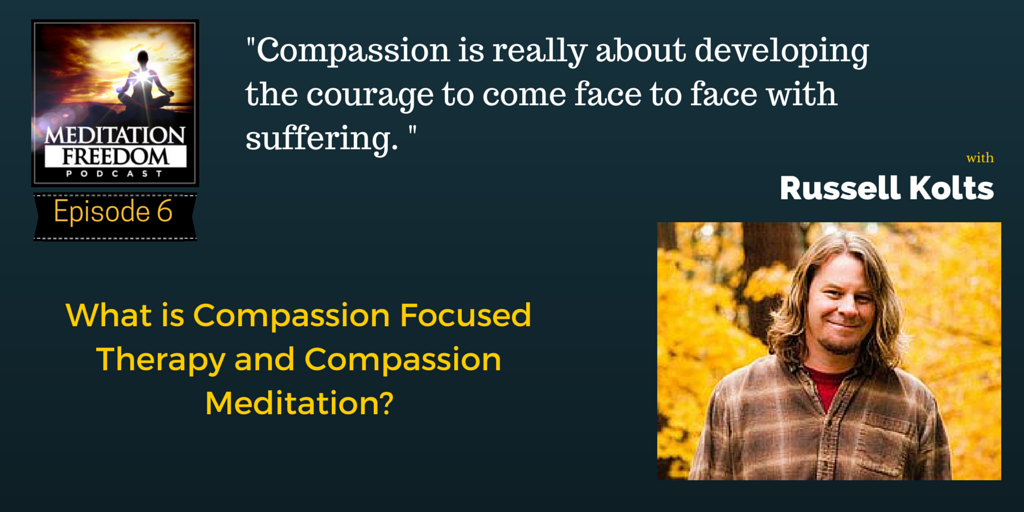
Russell Kolts Compassion Focused Therapy Interview
This is a summary (not a full transcript) of the interview with author and professor Russell Kolts
Russell began with an intense study of Buddhism; reading, meditation, and doing retreats after three years, he realized that a compassionate, mindfulness practice had been life changing.
He says that it was the birth of his child about how he was motivated to start a a meditation mindfulness practice after his son was born. He taught compassionate therapy, and since he struggled with negative emotions in his own life such as anger, and irritability. He observed himself not following his own advice. So he deepened his practice. He realized, “if you want your child to become a good parent, become the person you want your child to be”. What message do your children get from their parents? So he started doing meditation practices, and learning from Buddhist teachers like the Dalai Lama.
He was then later also more able to bring what he learned in his meditation practice and into his psychotherapy work work, by focusing on, “Compassion Focused Therapy”. He then had a scientific scaffolding for working with the mind.
Some examples of practices that would work for him in the moment during.
Mindfulness meditation helps notice what is moving in the mind, such as anger and irritation. This practice helped him recognize it earlier, so just by naming the emotion, it reduces it’s hold on the person.
Meditation and cultivation of compassion have gradually transformed his experience so that the destructive emotions came up less, due to ongoing work with with deep awareness.
Switching out from “that’s a bad emotion” and judgments, looking more deeply, what’s going on here, and other habitual responses.
Working with close family members shows that it is not easy to not be reactive.
Insight is hugely trans-formative
From a scientific perspective, those destructive threat emotions such as anger and fear where designed by evolution, so we can make a rapid response.
The compassion work is by seeing how the threatening person also wants to be happy and maybe our goals conflict at that moment. And at that moment. Shifting from judging and labeling to understanding.
Things don’t always go your way. It takes practice to react with compassion and understanding.
He brings mindfulness and compassion into his classes. He has a course on Compassion Focused Therapy, which involves compassion meditation and mindfulness meditation. Students are meditating in the class, because there is just no other way to learn about it.
He sees how it affects the classroom, students feel safer, they can think better, and more reflectively, and they can have dialogue, since there is a container there. It helps the students with difficult course subjects, helps them to center themselves. They don’t necessarily struggle with the problem, but more with the idea, a self-limiting belief. “There’s something wrong with me” is the most threatening idea, very distracting. Meditation helps you recognize these experiences that come and go in the mind, and not necessarily see them as real or true. Notice them, and let them go.
Slowing down their breathing helps the students. They’re not just techniques on the pillow, but at some point it needs to come off the meditation cushion. At some point it has to come into our lives, and begin to transform. It begins to happen behaviorally, and neurologically.
Other Benefits of meditation practices
Russell thinks that because the world moves so quickly, we’re constantly connected. When he was growing up there were just 4 TV channels, now hundreds, tweeting etc, is all wonderful and convenient. But we’re training our brains and minds to expect a certain high level of stimulation. And we’re not designed to function like this all the time. Just sitting and breathing is hard enough! We’ve trained our brains to expect this level of stimulation. To just sit and do only one thing. If you can’t even sit for 5 minutes, its a sign to learn to slow down and be here now, with full focus of one’s mind. And maybe that’s reading, listening, and be fully present is tremendously powerful. If you want to be really good at something, you can’t be dividing your attention. It’s too stressful to maintain that kind of fragmented attention.
We just need to learn to slow down. He orients students on the front end that this is going to be uncomfortable at first to meditate. Key is to start very small, may start with a minute or two minutes, and go up from there. One of the biggest impediments is expectations. Folks don’t realize that it is actually very difficult. So they get frustrated with themselves, and they give up. In the West particularly we move into this self-criticism.
1. One thing we’re doing is to stabilize our attention
2. Training ourselves to see mental experiences and feelings as mental events, and not necessarily the stuff of reality
3. Training ourselves to notice the movement in the mind. Mentions giving a ticker for a finger biter, which helps train themselves to notice when they start doing the biting. Same with mindfulness. From this perspective the distractions are not a problem at all. These are opportunities to notice movement in the mind.
Russell’s focus right now is Compassion Focused Therapy to help people with emotions like anger. He’s currently working on “CFT made simple”, to help clinicians help their clients. They’re doing more research to demonstrate it’s effectiveness. It really helps that the science is beginning to be there, they now have data to demonstrate it.
He’s starting to see increasing interest in institutions. Lots of misconceptions still about compassion, it’s not being “sweet and nice all the time”.
Being sensitive to suffering and help out in an enduring way. It is still hard to pursue compassionate agendas in politics, because the money is not yet going there. We can have both, compassion and a good bottom line.
If you’re interacting with compassion and mindfulness, you can spread that pro-social stuff.
Russell Kolts one tip for dealing with an oncoming destructive emotion.
When we notice, “I’m getting angry, anxious, etc”. Take 30 seconds to a minute. Slowing down the in-breath (in CFT it is called “soothing rhythm breathing”) and the out-breath. And after that ask yourself the question, “what would be most helpful in this situation”? What would I want them to understand? Slowing down the breaths doesn’t make the problem go away, it just softens, gives “that thread stuff”, gives it some space.